Early Context: A Quiet Beginning
In the mid-1990s, the NBA was defined by volume scorers, dramatic personalities, and nightly highlights. Amid that landscape, a young forward entered the league with little fanfare beyond his draft position. He spoke softly, avoided attention, and carried himself more like a student than a star.
He had grown up in the U.S. Virgin Islands, learning discipline through swimming before basketball became his path. When a hurricane damaged local pools, he shifted to the court. By the time he reached college at Wake Forest, he was known less for flair and more for fundamentals—footwork, timing, and balance.
When he was selected first overall in the 1997 NBA Draft by the San Antonio Spurs, expectations were high, but the presentation remained understated. There were no grand declarations. There was only preparation.
The First Turning Point: Joining a System
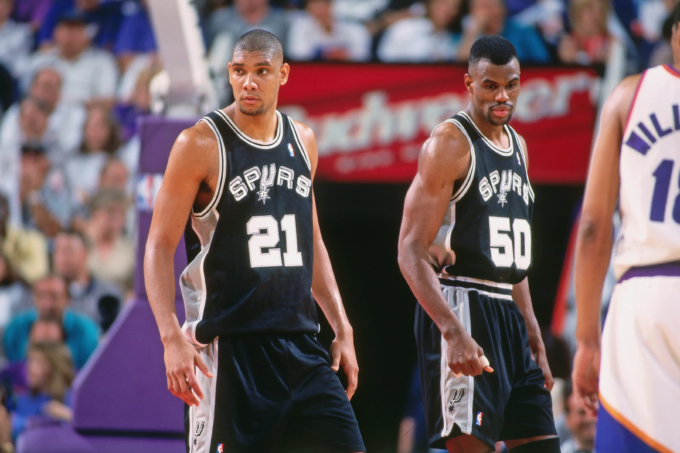
San Antonio already had an established center, David Robinson, and a culture built on structure. Instead of clashing for dominance, the two formed a partnership. It became known simply as “The Twin Towers.”
In his rookie season, the young forward averaged over 20 points and 10 rebounds. The numbers were strong, but what stood out was how naturally he fit into a system. He did not reshape the team around himself. He adapted to it.
Two years later, in 1999, the Spurs won an NBA championship. The forward was named Finals MVP. At 22, he had already achieved what many players chase for a lifetime.
The story of his career did not unfold through sudden transformations. It moved steadily, shaped by repetition and consistency.
Building Year by Year
Through the early 2000s, the Spurs became a constant presence in the playoffs. While other franchises rose and fell, San Antonio remained.
The forward refined his game. He expanded his range. He learned to read defenses. He became a dependable anchor on both ends of the floor. Coaches trusted him to stabilize lineups. Teammates trusted him to make the correct play.
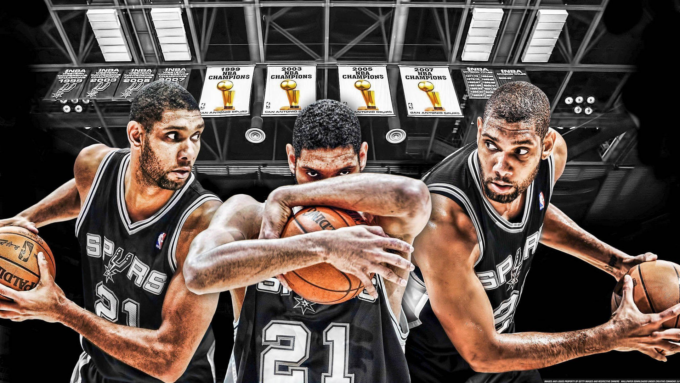
Championships followed in 2003, 2005, and 2007. Each run looked different. The roster changed. The league evolved. Yet his role remained clear.
He was not the loudest player in the arena. He did not dominate headlines. But when games slowed in the postseason, possessions often ended in his hands. He delivered with calm regularity.
During this period, he earned multiple MVP awards. The recognition reflected performance, not spectacle. His game was built on angles, timing, and restraint.
Leadership Without Noise
As veterans retired and younger players joined, his position within the team shifted. He became the reference point.
Leadership, in his case, did not come through speeches or displays. It came through habits. He arrived early. He practiced deliberately. He accepted corrections. When mistakes happened, he adjusted without dramatics.
This approach shaped the culture around him. The Spurs became known for ball movement, spacing, and patience. Possessions were deliberate. Success was shared.
New teammates—many from different countries—found a consistent environment. The forward welcomed them in the same way he had entered: without hierarchy, with clarity.
By the early 2010s, the league was faster. Perimeter play dominated. Younger stars arrived with different rhythms. Yet he remained relevant.
A Late-Career Adaptation
In 2013, the Spurs reached the NBA Finals and lost in seven games. The series ended on a missed opportunity, and the season closed quietly.
One year later, the same group returned. This time, the style was different. The ball moved rapidly. Possessions flowed through multiple hands. The forward no longer served as the primary scorer. Instead, he became a pivot—setting screens, creating space, anchoring defense.
In 2014, the Spurs won another championship. It was his fifth. The Finals MVP went to a younger teammate, reflecting the evolution of the team.
At 38, he remained central without being dominant. His minutes decreased. His influence did not.
The End Without Ceremony
He played 19 seasons. All of them were in San Antonio.
There was no farewell tour. No staged announcement. When retirement came in 2016, it arrived in a brief message. The same tone that marked his entry into the league defined his exit.
Across his career, he accumulated:
- Five NBA championships
- Two MVP awards
- Three Finals MVPs
- Fifteen All-Star selections
- Fifteen All-NBA honors
- Fifteen All-Defensive Team selections
The numbers documented excellence. They did not capture the rhythm of his career.
His legacy was built through accumulation. Year after year. Practice after practice. Possession after possession.
What the Career Reveals Over Time
When people look back, they often note how little changed. The same fundamentals appeared in his final season as in his first.
The league around him shifted. The pace increased. Shot selection transformed. Marketing grew louder. Yet his approach remained stable.
He did not become legendary through moments alone. He became legendary through presence.
He was rarely the subject of daily debate. Instead, he became a reference point in conversations about durability, structure, and trust.
In a sport that often celebrates acceleration, his career unfolded through continuity.
The story did not peak in a single season. It stretched across nearly two decades.
It showed how a player could remain central without demanding attention. How leadership could exist without volume. How excellence could be repetitive.
When his era ended, the Spurs entered a period of rebuilding. The absence was not dramatic. It was structural.
A constant had been removed.
That absence clarified what had always been there.
AI Insight: Over time, people tend to notice that the longest-lasting legacies are often built through steady presence rather than dramatic moments.