
The Man Who Vanished in Midair
On November 24, 1971, a man using the name D. B. Cooper boarded Northwest Orient Flight 305 from Portland to Seattle. He appeared ordinary—wearing a suit, ordering a drink, and sitting quietly in his seat.
Shortly after takeoff, he handed a note to a flight attendant. It claimed he had a bomb.
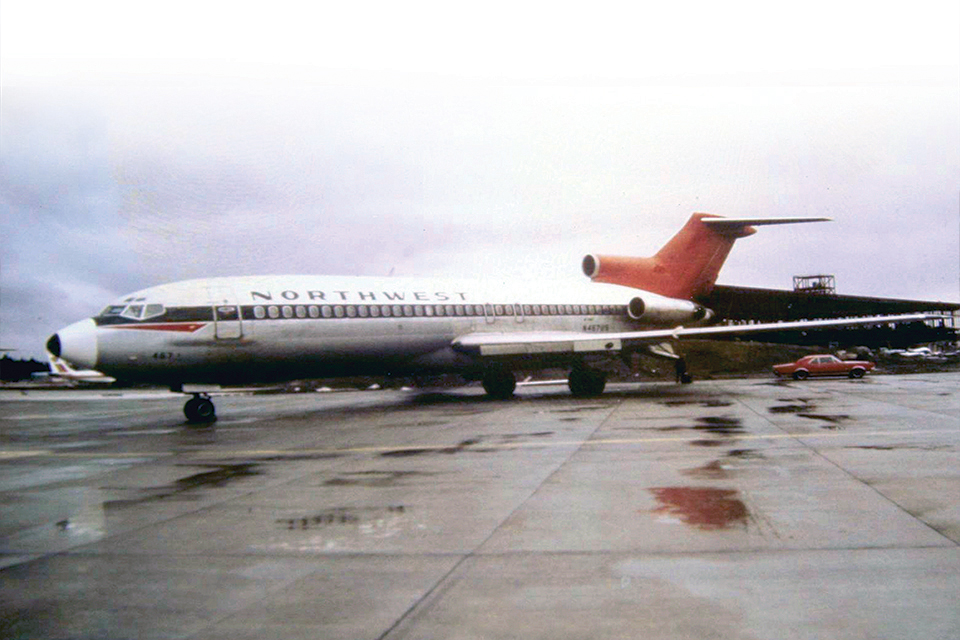
Cooper demanded $200,000 in cash and four parachutes. The plane landed in Seattle, where authorities complied. Passengers were released. The aircraft took off again, this time headed toward Reno.
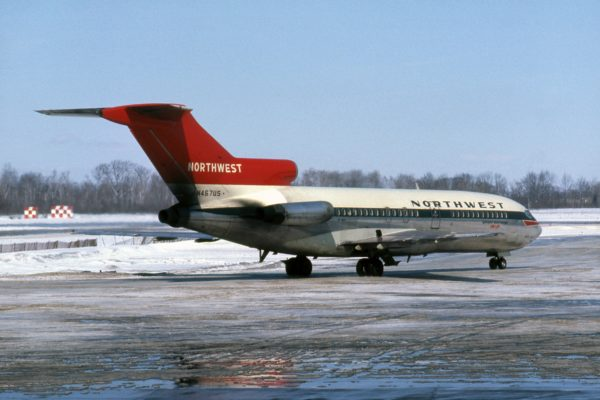
Somewhere over the dark forests of the Pacific Northwest, Cooper lowered the rear staircase of the Boeing 727 and jumped into the night—into rain, wind, and freezing air.
He was never seen again.
What Was Left Behind
No confirmed trace of Cooper was ever found.
In 1980, a young boy discovered bundles of deteriorated cash along the Columbia River. The serial numbers matched Cooper’s ransom. Beyond that, nothing concrete surfaced.
No body.
No parachute.
No equipment.
No identity.
The jump itself remains a puzzle. Conditions were harsh. The terrain below was unforgiving. Many believe survival was impossible.
Others point out that Cooper seemed knowledgeable about aircraft. He chose a plane capable of lowering its stairs mid-flight. He requested specific parachutes. His instructions suggested planning.
Did he die in the wilderness?
Or did he disappear by design?
Decades of Theories
Over the years, suspects emerged—former soldiers, pilots, engineers, men with similar backgrounds and motives. Each theory offered partial alignment.
None resolved the core mystery.
The FBI investigated for 45 years before closing the case in 2016, citing lack of new evidence. Yet the story remains active in public memory.
Because it resists conclusion.
Cooper represents a rare intersection of crime and absence. There is no final scene. No courtroom. No ending.
Only a gap in the sky.
Why It Endures
Most crimes leave residue—evidence, aftermath, consequence.
This one left possibility.
The mystery persists not because of violence, but because of vanishing.
A man stepped into air and became narrative.
Each generation returns to the same questions:
- Was it a perfect escape?
- Was it a fatal miscalculation?
- Who was he, really?
The case invites imagination without resolution.
It does not demand belief.
It permits uncertainty.
The Shape of an Unsolved Story
What keeps D. B. Cooper alive in memory is not the crime itself.
It is the absence of an ending.
No confession closed the loop.
No discovery completed the arc.
No evidence drew a line.
The story exists in suspension.
Like the moment before the jump.
The plane continued.
The man did not.
AI Insight: Over time, people tend to notice that the mysteries which endure most are the ones that never offer a final scene, leaving the story suspended between what happened and what might have.