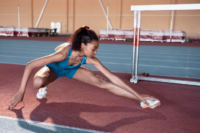
Sports

Sports often begin at home. A mat unrolled in a corner. Shoes drying near the door. A quiet stretch before sunrise. Long before a field or gym appears, movement starts in domestic space. Over time, subtle digital tools have settled into these routines, shaping how people train, recover, and stay active without changing the spirit of sport itself.
In everyday life, sports are less about competition and more about continuity. They live in habits—morning walks, evening stretches, weekend games. Technology now supports these habits quietly. Watches track time. Mats count reps. Screens mirror form. None of this turns the home into a gym. It simply steadies the rhythm of movement.
✨ AI Insight:
As sensors became smaller and more affordable, basic feedback moved into everyday sports gear, allowing routine movement to gain gentle structure without becoming performance-driven.
The Home as Training Ground
For most people, sport is not a stadium experience. It is a living-room stretch, a balcony workout, a hallway sprint with a child.
Digital tools adapt to these spaces. Compact treadmills fold under beds. Smart ropes hang beside doors. Fitness apps project routines onto walls.

The room remains domestic. The sofa stays in place. The table holds dinner.
Movement overlays life rather than replacing it.
This integration lowers barriers. Exercise no longer requires a destination. It begins where one already is.
Feedback Without Pressure
Traditional training relies on coaches and mirrors. At home, feedback used to be absent.
Now, small cues guide motion. A watch vibrates when pace drops. A mat signals when balance shifts. A screen outlines posture.
These signals are gentle. They do not correct with authority. They reflect.
The body learns through awareness rather than instruction.
This preserves autonomy. The athlete remains in control.
The room becomes a partner rather than a judge.
Rhythm Over Performance
Many tools emphasize cadence rather than outcome. Timers structure intervals. Audio cues mark phases.
The focus shifts from results to rhythm.
A person follows breath. A runner follows step.
This reframes sport as routine rather than event.
The home supports consistency. The hallway becomes a track. The living room becomes a studio.
Movement blends with daily flow.
Adapting to Limited Space
Homes impose constraints. Ceilings are low. Floors are shared. Noise matters.
Innovators design within these limits. Workouts become quiet. Movements compress. Equipment folds.
Resistance bands replace machines. Bodyweight replaces weight stacks.
Sensors adjust expectations. A short run counts. A small movement registers.
This validates effort.
The home becomes a legitimate place to train.
Recovery as Part of Space
Sport is not only movement. It is rest.
Massage guns, heated pads, compression sleeves now appear beside couches and beds.
They turn recovery into a domestic ritual.
Muscles relax while reading. Stretching happens during television.
The line between sport and rest blurs.
The room supports both exertion and ease.
This integration matters. It prevents sport from becoming interruption.
It becomes part of living.
Visualizing Progress Quietly
Some tools record distance, time, or frequency. The data remains in pockets.
It does not dominate walls.
Progress is private.
This reduces comparison. It supports continuity.
The athlete competes with habit, not with others.
The home remains personal.

The Social Layer
Screens connect solitary routines to shared experience. A run follows a virtual route. A class unfolds in a corner.
Yet the room stays intact.
A person moves among familiar objects.
Community enters without displacement.
Sport becomes connected without becoming public.
The home remains sanctuary.
Teaching Through Experience
Digital sports tools often teach implicitly.
A vibration indicates pace. A tone marks rest. A graphic shows alignment.
Users learn through repetition.
Technique improves without instruction.
The body adapts.
The room becomes classroom.
Equipment That Disappears
The most effective tools vanish when unused.
A mat rolls up. A bike folds. A sensor hides in a shoe.
This preserves domestic character.
The living room does not become a gym.
Sport enters and leaves.
This flexibility prevents fatigue.
The home remains home.
Movement as Atmosphere
When sport lives in a space, it changes tone.
A room that hosts stretching feels different.
A hallway that sees daily steps feels alive.
Movement becomes ambient.
This shapes mood.
The house feels active even at rest.
Why It Matters
Sport sustains health, but also identity.
When movement feels accessible, people remain engaged.
Digital tools reduce friction. They lower thresholds. They provide gentle structure.
They do not replace effort. They support it.
The home becomes a place where bodies are used, not only housed.
This matters in a world where movement often competes with screens.
By embedding sport into space, technology restores balance.
Not through intensity, but through consistency.
A stretch before bed. A walk after dinner. A game in the living room.
These moments accumulate.
The room becomes witness.
The body remains central.
Sport returns to its origin—play.
Not spectacle. Not performance.
Just movement.
The tools fade.
The rhythm remains.
And the home learns how to move with its people.