More Than a List of Achievements
When people speak about Tim Duncan’s legacy, they often begin with numbers—five championships, two MVP awards, fifteen All-Defensive selections, nineteen seasons in one uniform. These facts establish greatness, but they do not fully explain it.

What Duncan left behind was not only a résumé.
He left a standard.
In San Antonio, success became routine. Playoff appearances felt expected. Seasons unfolded with structure. That sense of order outlived any single roster.
The legacy was not built through spectacle.
It was built through continuity.
A Culture That Outlived the Star
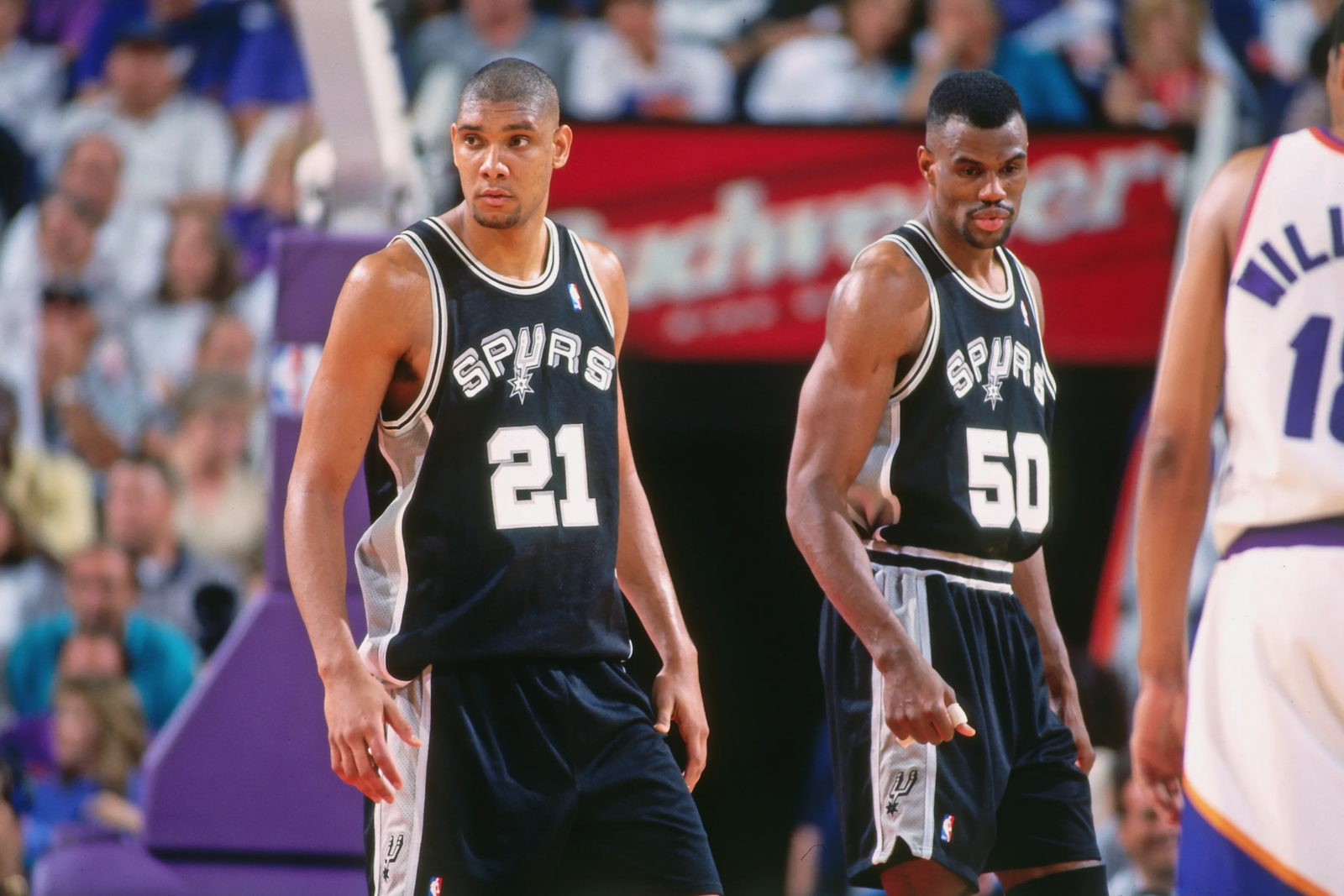
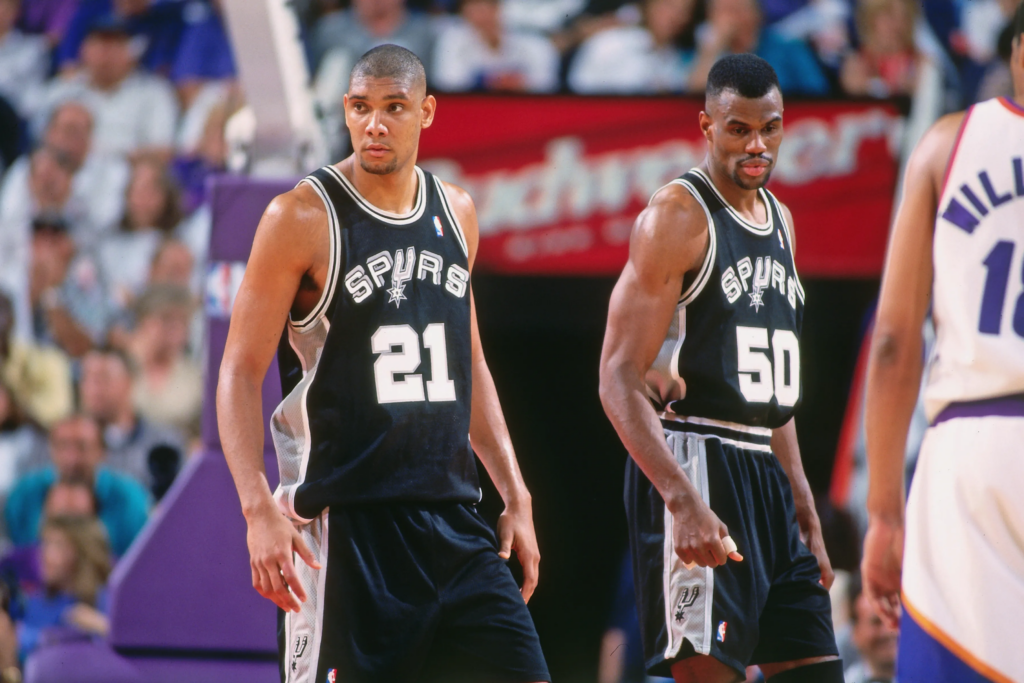
Duncan arrived in 1997, joining David Robinson and stepping into a franchise already rooted in discipline. Over time, he became the reference point.
As Robinson retired, Duncan became the constant.
As Tony Parker and Manu Ginóbili emerged, he became the anchor.
As younger players arrived, he became the model.
The Spurs’ identity—ball movement, spacing, patience, accountability—did not belong to a coach alone. It mirrored Duncan’s approach.
Even after his retirement in 2016, the imprint remained. Players who never shared a locker room with him still operated inside an environment shaped by his habits.
Teams often lose direction when legends leave.
San Antonio lost presence, not principles.
That distinction defines legacy.
Redefining What a Superstar Can Look Like
In an era that celebrated volume scorers and visible dominance, Duncan offered a different image of stardom.
He did not lead through volume.
He did not perform leadership.
He did not build identity around expression.
Yet his teams revolved around him.
He demonstrated that a franchise player could be:
- Quiet without being distant
- Central without being controlling
- Dominant without being dramatic
This reframed expectations.
Future big men were no longer measured only by scoring totals. They were evaluated by positioning, timing, decision-making, and impact on team flow.
Duncan’s influence reached beyond San Antonio.
It altered how coaches described efficiency.
It reshaped how fundamentals were taught.
His game became instructional.
A Legacy Felt in Structure
The most lasting effect of his career is not found in highlight reels.
It is felt in rhythm.
In how teams seek balance rather than chaos.
In how coaches emphasize spacing and patience.
In how young players learn that impact can exist without visibility.
Duncan’s presence taught that stability itself can be competitive.
His teams did not survive disorder.
They avoided it.
That approach became an identity.
Even now, when analysts describe “Spurs basketball,” they are often describing the environment Duncan helped normalize—order, discipline, shared responsibility.
The legacy is not a style of play.
It is a way of operating.
What Time Reveals
As years pass and new stars cycle through the league, Duncan’s career gains clarity.
There is no single season that defines it.
No single play that encapsulates it.
No single rivalry that contains it.
Instead, there is an absence of disruption.
His career feels like a line rather than a wave.
That shape becomes more distinct in retrospect.
When teams struggle with volatility.
When stars come and go.
When systems reset repeatedly.
Only then does the difference become clear.
Duncan did not leave behind a moment.
He left behind a method.
One that proved greatness does not need to announce itself.
It only needs to endure.
AI Insight: Over time, people tend to notice that the most lasting legacies are often the ones that quietly shape how everything else begins to function.